
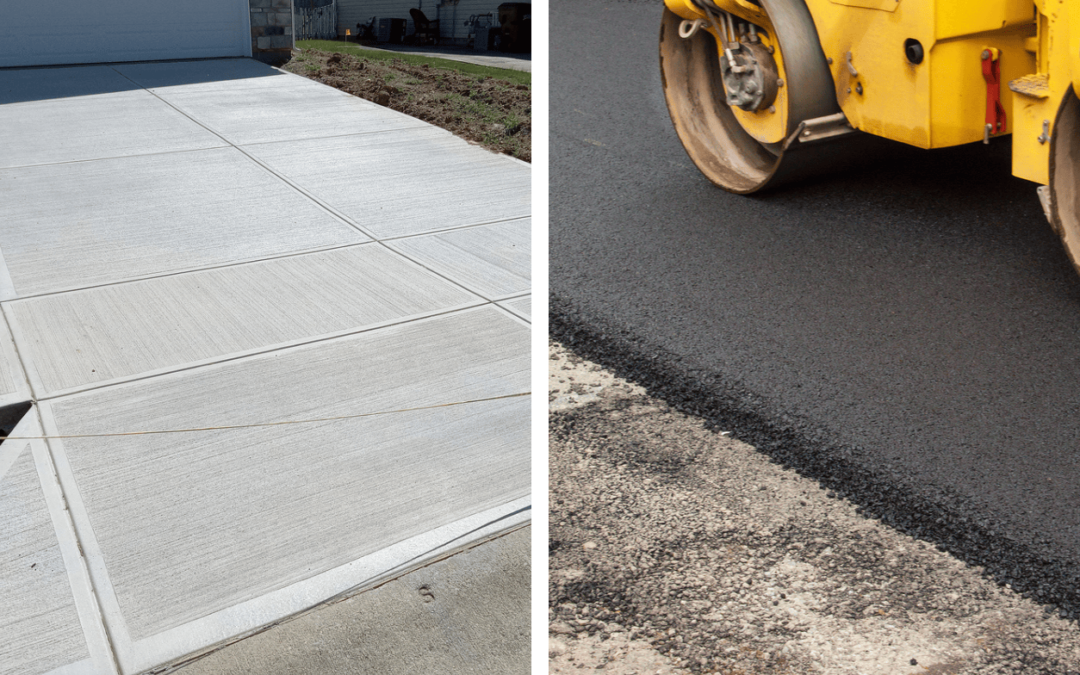
Choosing between an asphalt or concrete driveway is one of the biggest decisions homeowners make when planning a new driveway installation in Colorado Springs or Monument. Both materials have advantages, but Colorado’s climate can affect how each performs over time.
Freeze-thaw cycles, snow and ice, UV exposure, temperature swings, drainage, and long-term maintenance all play a role in how well a driveway holds up over the years. Some homeowners prefer asphalt because of its flexibility and lower upfront cost, while others lean toward concrete because of its appearance and longevity.
The right choice often depends on your budget, maintenance expectations, property layout, and how you plan to use the driveway long term.
At E&K Paving, we help homeowners throughout Colorado Springs, Monument, and surrounding areas understand the differences between asphalt and concrete driveways so they can make a more informed decision before investing in a new surface.
Quick Overview
| Feature | Asphalt Driveways | Concrete Driveways |
|---|---|---|
| Upfront Cost | Generally lower | Generally higher |
| Lifespan | 15–25 years | 25–40+ years |
| Flexibility | More flexible | More rigid |
| Colorado Freeze-Thaw Performance | Typically handles movement better | Can crack from expansion/contraction |
| Maintenance | Requires seal coating and crack repair | Lower routine maintenance |
| Repairability | Easier and less expensive to repair | Repairs can be more noticeable |
| Appearance | Dark, smooth finish | More decorative customization options |
| Installation Speed | Faster installation and curing | Longer curing process |
How Colorado Weather Affects Driveways
Colorado’s climate creates unique challenges for any driveway surface. Throughout Colorado Springs and Monument, driveways are exposed to dramatic weather shifts year-round. Winter brings freezing temperatures, snow, and ice, while summer introduces intense UV exposure and heat at higher elevations.
These constant temperature swings create expansion and contraction within driveway materials. Moisture penetration also becomes a major concern. When water enters small cracks and freezes, it expands beneath the surface and gradually weakens the material over time.
Because of these conditions, choosing the right driveway material is not just about appearance or upfront cost. It is also about long-term durability and how the material responds to Colorado’s climate.
How Asphalt Performs in Colorado
Asphalt is one of the most common driveway materials used throughout Colorado, largely because it performs well in freeze-thaw environments.
One of asphalt’s biggest advantages is flexibility. Unlike rigid surfaces, asphalt can expand and contract more naturally as temperatures change. This flexibility often helps reduce severe cracking caused by ground movement and freezing conditions.
Asphalt also tends to absorb heat more effectively because of its darker color. During winter, this can help snow and ice melt slightly faster compared to lighter concrete surfaces.
For many homeowners, asphalt is appealing because it:
- typically costs less upfront
- installs faster
- is easier to repair
- performs well in Colorado weather conditions
However, asphalt is not maintenance-free. Over time, UV exposure and oxidation gradually dry out the asphalt surface, making it more vulnerable to cracking and moisture intrusion. Routine seal coating and crack repair help protect the surface and extend the lifespan of the driveway.
How Concrete Performs in Colorado
Concrete is known for durability, strength, and decorative versatility. Many homeowners choose concrete because they prefer its appearance or want additional customization options such as stamping, textures, or colored finishes.
Concrete can also last longer than asphalt in some situations when properly installed and maintained.
However, concrete behaves differently in Colorado’s climate because it is more rigid. Freeze-thaw movement can place stress on concrete slabs, especially if moisture penetrates small cracks or joints. Over time, this can lead to cracking, shifting, or surface deterioration.
Concrete also tends to:
- cost more initially
- require a longer curing process
- be more expensive to replace or repair
- show repairs more visibly after patching
For homeowners prioritizing aesthetics and long-term lifespan over upfront cost, concrete may still be an attractive option depending on the property and budget.
Comparing Cost Differences
For many homeowners, cost becomes one of the biggest deciding factors between asphalt and concrete.
Asphalt is generally more affordable upfront, making it a popular choice for:
- larger driveways
- long rural properties
- budget-conscious homeowners
- projects needing faster installation timelines
Concrete usually carries a higher initial price because of:
- material costs
- labor requirements
- longer installation timelines
- decorative finish options
While concrete may last longer overall in some cases, the higher upfront investment can be significant depending on the size of the driveway.
It is also important to consider long-term maintenance and repair costs rather than focusing only on initial installation pricing.
Lifespan Expectations in Colorado
Both asphalt and concrete can last many years when installed properly and maintained correctly. However, Colorado’s climate can shorten lifespan if drainage problems or neglected maintenance are allowed to develop.
Most asphalt driveways in Colorado typically last around 15 to 25 years. Lifespan depends heavily on:
- installation quality
- drainage conditions
- climate exposure
- maintenance consistency
- traffic load
Concrete driveways may last 25 to 40 years or longer in some situations. However, they are still vulnerable to cracking, settlement, and freeze-thaw stress over time.
Neither material is completely maintenance-free, especially in Colorado Springs where weather conditions create constant stress on paved surfaces.
Maintenance Differences
One of the biggest differences between asphalt and concrete is how maintenance is handled over time.
Asphalt requires more routine preventative maintenance. Seal coating, crack filling, and occasional resurfacing help protect the surface from moisture and UV damage. While this requires ongoing upkeep, asphalt repairs are often simpler and less expensive compared to major concrete repairs.
Concrete typically requires less frequent maintenance, but repairs can become more complicated when cracking or slab movement develops. In some cases, replacing individual sections of concrete can create noticeable color differences between old and new surfaces.
Drainage maintenance is important for both materials. Water intrusion beneath either surface can eventually lead to cracking, shifting, erosion, and structural deterioration.
Repairability and Long-Term Repairs
Repairability is another area where asphalt often has an advantage.
Small asphalt repairs, crack filling, patching, and resurfacing can usually blend more naturally into the existing driveway surface. This often makes long-term maintenance more manageable and cost-effective for homeowners.
Concrete repairs can sometimes stand out visually because patched or replaced sections rarely match the original surface perfectly. Large concrete cracks or settling may also require slab replacement instead of smaller isolated repairs.
For homeowners planning to stay in their home long term, future maintenance and repair expectations are important factors to consider before choosing a driveway material.
Installation Timeline Differences
Installation speed is another practical consideration for many homeowners.
Asphalt projects are generally completed faster and can usually be driven on sooner compared to concrete. This can help reduce disruption for homeowners who need quicker driveway access.
Concrete requires a longer curing period before vehicles can safely use the surface. Weather conditions can also affect concrete curing timelines more significantly during colder periods.
Because Colorado weather can shift quickly throughout the year, proper scheduling matters for both materials.
Which Driveway Material Is Better for Colorado?
There is no universal answer for every property or homeowner.
In many Colorado Springs and Monument neighborhoods, asphalt remains a popular choice because it performs well in freeze-thaw conditions, costs less upfront, and is easier to maintain and repair over time.
Concrete may make more sense for homeowners who prioritize:
- decorative curb appeal
- longer potential lifespan
- reduced routine maintenance
- customized finishes
Ultimately, the best driveway material depends on your:
- budget
- maintenance expectations
- property conditions
- long-term goals
- aesthetic preferences
Both asphalt and concrete can perform well in Colorado when installed properly and maintained correctly.
Choosing the Right Driveway for Your Property
Investing in a new driveway is a major decision, and understanding how Colorado’s climate affects different paving materials can help homeowners avoid costly mistakes later.
At E&K Paving, we help homeowners throughout Colorado Springs, Monument, and surrounding communities evaluate driveway options based on their property, budget, and long-term goals. Whether you are considering a new asphalt driveway, resurfacing an aging surface, or comparing paving materials for a future project, proper installation and long-term maintenance both play a major role in maximizing driveway performance and lifespan.