
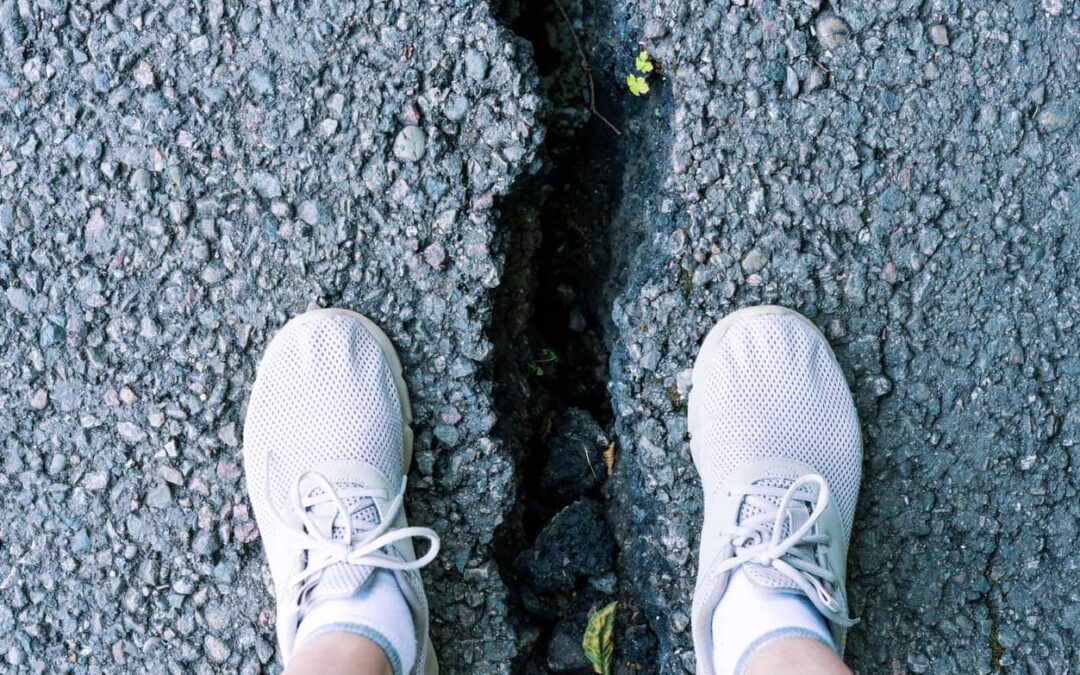
Asphalt driveways in Monument and Colorado Springs face a unique combination of stresses: freeze-thaw cycles, intense UV exposure at elevation, dramatic temperature swings, and occasional heavy moisture. Over time, those conditions show up in predictable ways.
At E&K Paving, we work on driveways throughout this area every day and see the same problems come up regularly. Knowing what to look for, and what each issue usually signals, can help homeowners catch problems early before they become more expensive to repair.
Quick Overview
- Surface cracking is one of the most common early signs of asphalt wear in Colorado’s climate
- Alligator cracking indicates structural issues beneath the surface, not just surface wear
- Potholes usually develop from freeze-thaw damage to areas that were already cracked
- Raveling — the surface becoming rough and loose — is often a sign of UV oxidation
- Edge crumbling is common and usually relates to drainage or lack of edge support
- Low spots that hold water after rain or snowmelt are a drainage and base concern
Surface Cracking
Small cracks are among the first signs of asphalt wear, and they are extremely common in Colorado’s climate. Hairline cracks along the surface or running across the width of the driveway often start from a combination of aging, UV oxidation, and thermal movement.
As asphalt ages and loses flexibility, it becomes more brittle and cracks more easily under the stress of temperature changes. In Monument and Colorado Springs, where temperature swings of 30 to 40 degrees within a single day are not unusual, this stress accumulates faster than in more moderate climates.
Small surface cracks are often repairable when addressed early. Left alone, they give water a path into the pavement, which leads to more significant problems. Understanding what causes cracks in asphalt driveways in Colorado can help homeowners recognize which type of cracking they are seeing.
Alligator Cracking
Alligator cracking is the pattern of interconnected cracks that covers a section of driveway and resembles reptile skin. Unlike surface cracks, alligator cracking is a sign of structural failure.
It typically develops when the base underneath the asphalt has been weakened, often from water intrusion or a compromised foundation that can no longer support the load of vehicle traffic. Once alligator cracking appears, the affected area generally needs more than a surface repair. Patching over it without addressing the base tends to be temporary.
This is one of the most serious problems a driveway can develop, and it is worth getting a professional evaluation to understand how widespread the base damage may be.
Potholes
Potholes are the natural progression of cracks and alligator cracking that have been left untreated. Once water gets into a cracked area and freezes, it expands and widens the opening. As traffic continues to pass over the weakened spot, the surface eventually collapses into a hole.
In Monument and Colorado Springs, where freeze-thaw cycles can happen dozens of times throughout the winter, this process can move faster than many homeowners expect. A driveway with visible cracks in the fall may have potholes by spring.
The durability of a pothole repair depends heavily on the method used and whether the underlying cause is addressed. Understanding pothole repair options can help homeowners evaluate whether a quick patch or a more thorough dig-out repair makes more sense for their situation.
Raveling
Raveling is when the surface of the asphalt starts to look rough, coarse, and loose. Small stones begin to separate from the surface, leaving a pitted or gravelly texture rather than a smooth, solid appearance.
This is primarily a UV oxidation problem. At the higher elevations of Colorado Springs and Monument, the sun’s ultraviolet radiation is more intense than at sea level, which dries out the oils in the asphalt binder faster. As the binder breaks down, it can no longer hold the aggregate together, and the surface begins to loosen.
Sealcoating is one of the most effective ways to slow raveling by shielding the binder from UV exposure. Caught early, raveling can often be addressed with sealcoating. Left untreated, it can progress to the point where resurfacing is needed.
Edge Crumbling
The edges of a driveway are structurally the most vulnerable part of the pavement. They lack the lateral support that the center of the driveway has, which makes them more susceptible to cracking, chipping, and crumbling over time.
Edge damage in this area is often related to drainage issues (water collecting along the edge and saturating the soil beneath), vehicles driving on or off the edge repeatedly, or lawn equipment cutting across the corner of the driveway. Once edge crumbling begins, it tends to progress inward if left unaddressed.
Low Spots and Standing Water
Low spots that hold water after rain or snowmelt are a sign that the driveway is not draining properly. This can develop from changes in grading over time, settling of the base material, or drainage issues that were not corrected during installation.
Water that sits on asphalt has more opportunity to work into any cracks or pores in the surface. In Colorado’s freeze-thaw conditions, standing water that freezes accelerates damage in the affected area. Addressing drainage early can prevent low spots from becoming larger structural problems. A better understanding of how drainage affects asphalt can help homeowners evaluate whether a drainage issue is contributing to other problems they are seeing.
Fading and Graying
Asphalt that has faded from black to gray is a visual sign of UV oxidation. While fading alone is mostly cosmetic, it signals that the asphalt binder is drying out and losing the flexibility it needs to handle temperature changes and traffic without cracking.
This is one of the reasons sealcoating matters in Colorado’s high-elevation environment. Regular sealcoating helps restore the surface’s appearance and, more importantly, protects the binder from further UV damage.
When to Call a Professional
| What You See | What It May Mean | Urgency |
|---|---|---|
| Small surface cracks | Early aging or oxidation | Address soon to prevent water entry |
| Alligator cracking | Base or structural failure | Professional evaluation needed |
| Potholes | Advanced crack and base damage | Repair promptly |
| Raveling/rough surface | UV oxidation of binder | Sealcoat or resurface |
| Edge crumbling | Drainage or support issue | Address before it spreads inward |
| Standing water | Drainage or base problem | Evaluate drainage before next winter |
Asphalt Repair and Maintenance Built for Colorado
Most of the asphalt problems homeowners see in Monument and Colorado Springs are manageable when caught early. The key is knowing what you are looking at so you can act before a smaller issue becomes a more expensive repair.
At E&K Paving, we evaluate and repair driveways throughout Colorado Springs and Monument. Whether you are seeing early cracks, edge damage, drainage concerns, or more serious structural issues, our team can help assess the condition of your pavement and recommend the right solution.